Stress and the Nervous System
Our bodies are designed to protect and heal us. Every moment, the nervous system responds to the world around us and helps us adapt to different situations. According to researchers and educators such as Dr. Joe Dispenza, the body’s autonomic nervous system reacts automatically when we experience stress.
This response is meant to keep us safe. When we face a stressful situation, the body enters what is commonly known as the fight-or-flight response. You may notice it through physical changes such as: a faster heartbeat, quicker breathing, sharper vision and awareness, muscles tightening or preparing for action. These changes happen because the nervous system is trying to protect us and help us respond quickly.
This stress response is healthy and natural. It was originally designed to last only a short time — long enough to deal with a challenge or danger. However, in modern life, many people experience stress for long periods. When the body stays in this protective state for too long, the nervous system, in other words, life force energy flow, may begin to hold onto stress instead of fully releasing it.
How Stress Can Be Stored in the Body
When we feel stressed, the body often reacts physically. For example, we might: tighten our shoulders, clench our jaw, hold tension in the neck or lower back, breathe more shallowly. At first, these reactions are temporary. If the stress continues for days, weeks, or even years, the body can begin to memorize these protective patterns. The nervous system is trying to help — it is simply repeating the pattern it has learned to keep you safe.
Over time, this stored stress can show up in the body as stiffness or limited movement, recurring pain, discomfort without a clear cause, or feeling physically tight or “stuck.” These patterns often appear along the spine because the spine protects the nervous system, which controls and coordinates every function in the body. The body is not working against you — it is protecting you in the best way it knows how.
Types of Stress Stored in the Body
Stress does not come from just one source. Throughout life, the nervous system responds to many different experiences, and over time, the body may begin holding protective tension, especially around the spine, where the nervous system is protected.
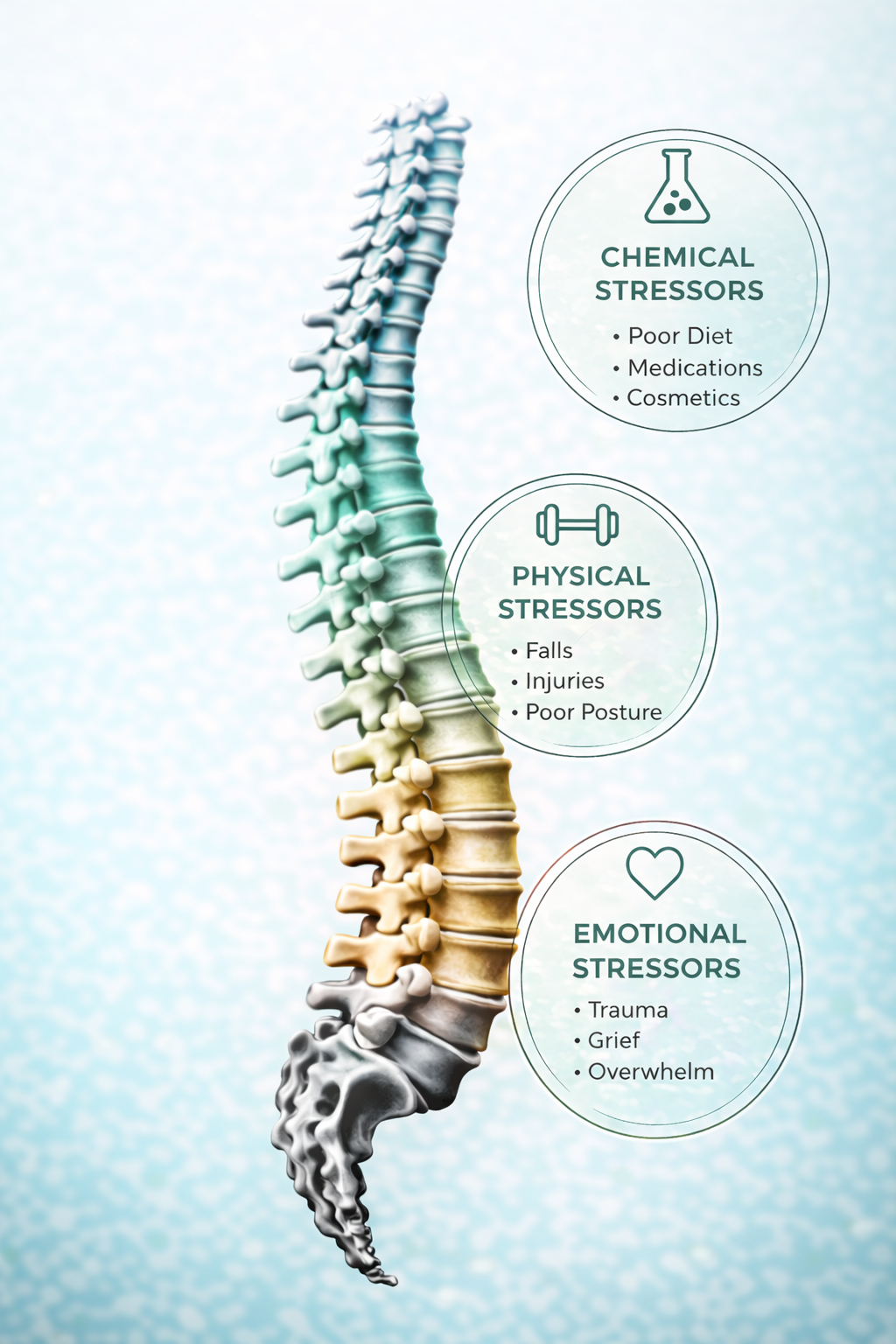
Physical stress comes from anything that places strain on the body’s structure. This can include injuries, car accidents, repetitive movements, poor posture, prolonged sitting, or sports-related strain. When the body experiences physical stress, muscles tighten to protect and stabilize the affected area. While this response is helpful at first, the body may continue to hold the pattern even after the original event has passed, leading to stiffness, restricted movement, or recurring discomfort.
Emotional stress comes from our thoughts, feelings, and life experiences. Situations such as childhood trauma, worry, grief, relationship challenges, or work pressure can activate the body’s stress response. Since the mind and body are closely connected, emotional stress often appears physically. Many people feel tension in the shoulders, neck, jaw, or chest. When stress continues over time, the nervous system may keep the body in a protective state, allowing these tension patterns to become stored in the body.
Chemical stress comes from substances and environmental influences that affect the body’s internal balance. This may include processed foods, dehydration, environmental toxins, medications, or pollution. When the body faces chemical stress, its systems must work harder to maintain balance. Over time, this can contribute to fatigue, reduced energy, and additional strain on the nervous system.