Who Can Benefit from Spinal Flow?
Spinal Flow is suitable for people of all ages and life stages. It works gently with the nervous system, supporting the body’s natural ability to release stress and restore balance.
Many people seek Spinal Flow when they experience ongoing stress, tension, fatigue, or discomfort, such as back and neck pain, headaches, difficulty relaxing, or trouble sleeping. It can also be supportive for children and teenagers, helping them regulate stress, improve focus, and feel more at ease in their bodies.
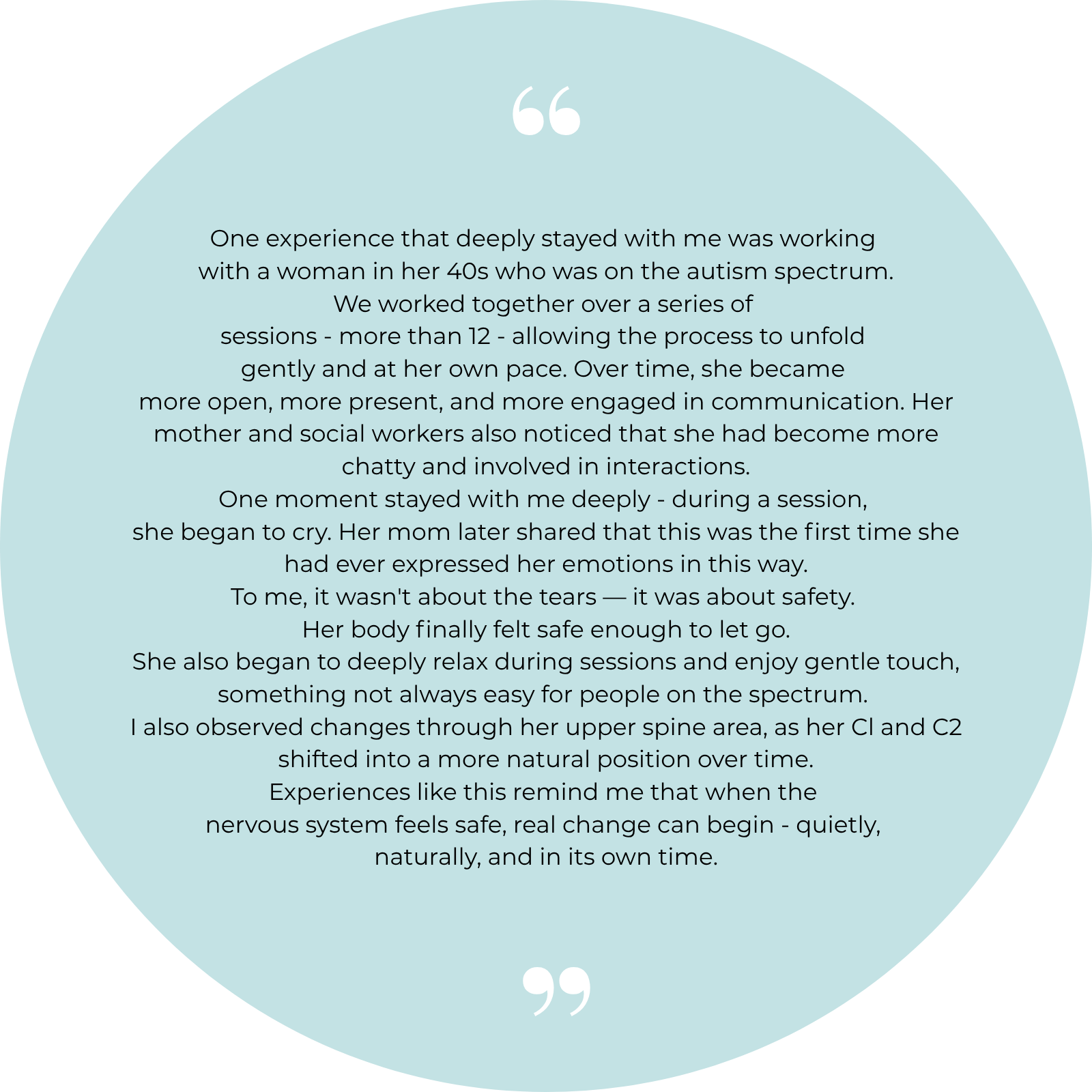
From my experience working with clients, I have seen a wide variety of people benefit from sessions — including those with chronic tension, back pain, headaches, individuals on the autism spectrum, and people seeking support during or after chemotherapy. Many notice improvements, such as greater relaxation, reduced tension, and a feeling of greater connection to their body.
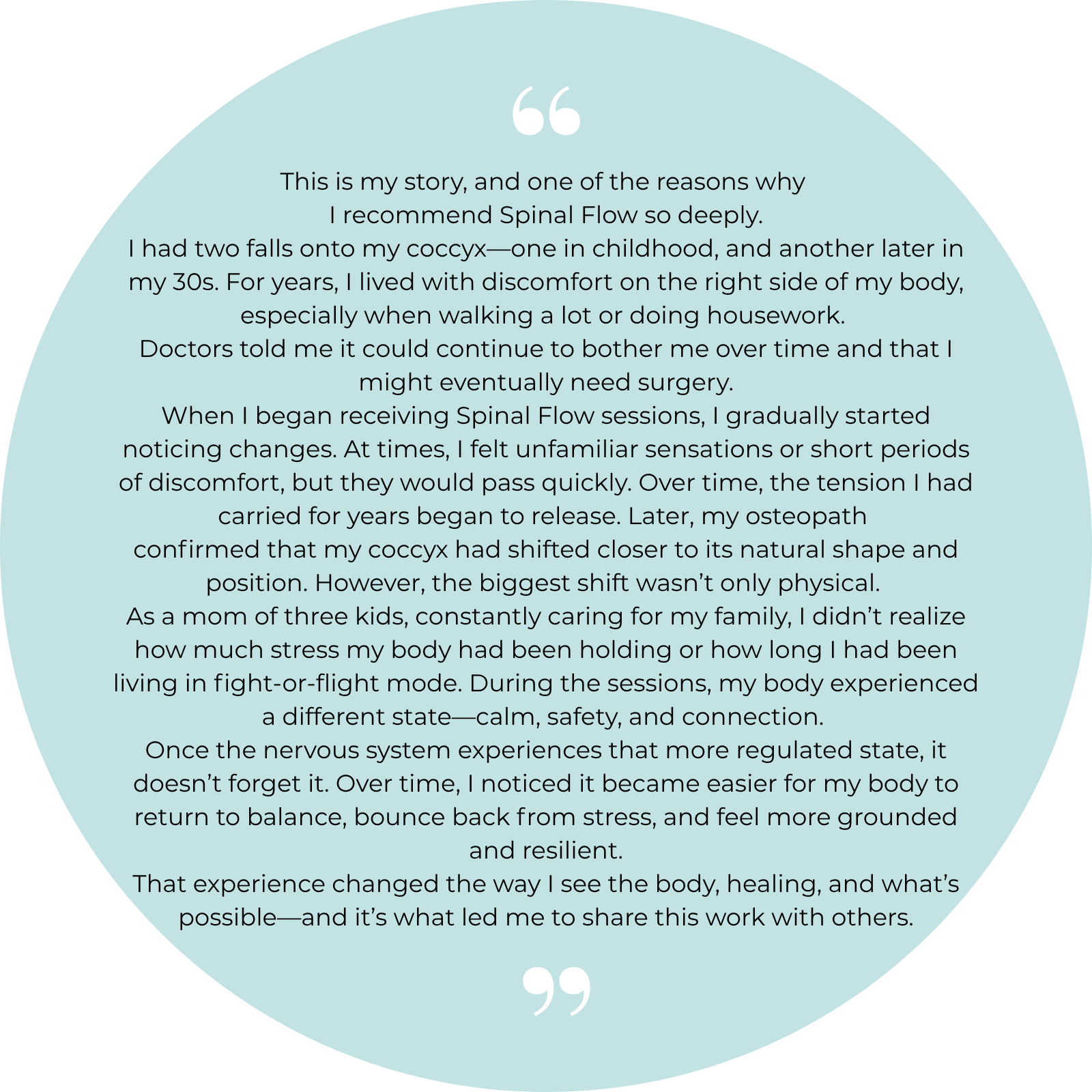
This gentle approach is also especially suitable for older adults, as it does not involve force or manipulation. For those who may find more forceful treatments uncomfortable, Spinal Flow offers a safe and supportive way to work with the spine and nervous system.
Spinal Flow does not replace medical care, but it can be a valuable complementary approach. Supporting the nervous system, it may help the body recover more efficiently and improve overall well-being. Many people also include sessions as part of their regular wellness routine to maintain balance and prevent stress from building up.
Because everybody is different, results can vary. Some people come for relaxation, while others notice unexpected positive changes as their body begins to function more freely. Ultimately, Spinal Flow supports the body in doing what it is designed to do — heal, adapt, and return to its natural state of balance.